AMA
Let's Build Your At-Home Booth
About This Event
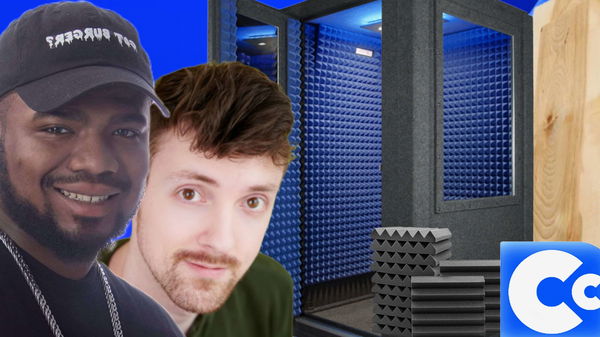
Having your own space is essential to being an actor but buying a portable booth can easily run you over $5000! So, is it even possible to record from home and not break the bank?
Yes!
Join Burger and fellow Alumni and VO Companion Thomas Prater as they break down what exactly you need and where to buy it. You can spend under $3000, and our mission is to show you how.
It's time you take control of your space and start booking!
Event Summary
Put together and presented by Thomas Prater - https://thomasprater.carrd.co/
Link to Thomas’ slides: https://docs.google.com/presentation/d/1JX3Z9P33AiogJxlQdCCSCIv3rZ_M6zFQ3K2MUl5KFts/edit?usp=sharing
Two brands that are probably the industry’s most well known commercially available “hard walled” home studios are https://studiobricks.com/ and https://whisperroom.com/
One of the more well known “soft walled” booths would be https://vocalboothtogo.com
June Yoon builds custom Acoustic Panels that you can use to treat your home studio space - https://juneyoon.info/#acousticpanels
Two main products that Thomas mentioned as part of his build were:
- Rockwool Acoustic Insulation batts - https://www.rockwool.com/group/products-and-applications/acoustic-insulation/
- Mass Loaded Vinyl - (not a brand like Rockwool) - https://commercial-acoustics.com/product/mass-loaded-vinyl/
For more info about Rockwool from their website - Acoustic Insulation: https://www.rockwool.com/group/products-and-applications/acoustic-insulation/
And for those wanting to learn a little more about Mass Loaded Vinyl (MLV) - this company's website has a decent explanation of what it is and how it works - https://acousticalsolutions.com/mass-loaded-vinyl-and-the-correct-uses-for-it/
A great image that demonstrates a "decoupled wall" would be:
The idea behind "decoupling" is to reduce the amount of "contact points" between the inner and outer walls, which in turn helps to reduce the vibration energy that can translate as low frequency sound that might get picked up by your microphone.
There are also ways to decouple your floor and ceiling as well, if building your own booth, but that's a little bit more advanced that this event could cover.
For those that are going to start their own research, keep in mind that a lot of people / companies will use the term "sound proofing" when they really mean "sound treatment" or "acoustic treatment". It is virtually impossible to sound “proof” a room in our homes, or even commercial spaces; not even professional recording studios are “perfectly” sound proofed, but have instead been extremely well sound treated.
If you’d like to do some reading about sound treatment and building your booth, another resource that I found really helpful personally was this 5 part article series from the Sound on Sound website: Practical Studio Design - Pt 1 - https://www.soundonsound.com/techniques/practical-studio-design-part1
(Looks to the next four parts at the bottom of each page)
re: Ventilation - Thomas built a “Baffle Box” to further reduce the sound emitted by his ventilation unit. This link explains what a “Baffle Box” is and how it works - https://www.soundproofyourstudio.com/blog/how-to-build-a-soundproof-baffle-box
Home Studio Sound Test guide that I made for the Audio Engineering class: https://bit.ly/cc-homeSoundTest
If you’d like to send me through an example of your home recording space, feel free to email me or use my support form link:
- My email - [email protected]
- The support form gives you the opportunity to upload several files, including photos of your space if you would like. - https://bit.ly/CCAudioSupportForm
You have reached the end of Neth's Notes™
Back to Top